
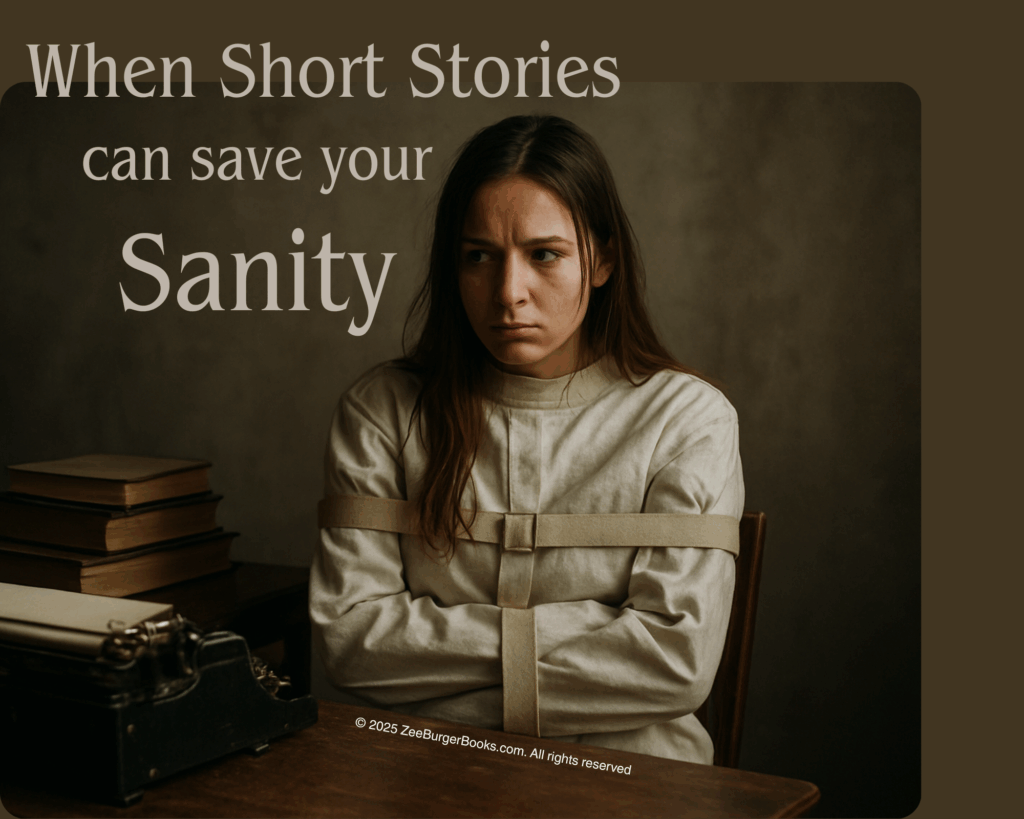
The cursor blinks like it’s keeping time with your doubt. You stare at it as if it personally betrayed you? While it blinks, your coffee goes cold and you’re wondering if you should just take up pottery instead. Yeah… we’ve all been there. And it’s normal – I promise! Every writer, at some point, lands in this swampy fog. The fix? Write short stories!
The trick isn’t waiting for the muse to return (she might be on an overdue vacation, you know). The trick is to write anyway — but on a smaller scale and that’s where short stories come in. So… if you’re stuck… let me hand you a smaller task:
Write a short story!
Not because you’re giving up, but because you’re switching gears wisely. Just think of a short story as a scenic trail when your novel feels like a mountain!
Why short stories actually help
Short stories are quick, satisfying, and forgiving. They let you experiment with voice, test a risky idea, or rebuild confidence without a months-long commitment. Finish one, feel the small victory, and your brain remembers how to be brave again.
A practical blueprint for a 2,000-word short story
In a fix, I use the three-act structure. It’s not fancy, but it works. Try the clear allocation below to keep your pacing tight.
| Part | % | Words (approx.) | What to do |
|---|---|---|---|
| Exposition (setup) | 25% | ~500 | Introduce main character, setting, and inciting event—keep it lean. |
| Rising Action | 50% | ~1,000 | Layer conflict, complications, stakes; the engine of the story. |
| Climax | 15% | ~300 | The turning point—character acts, decision is made, consequences start. |
| Falling Action | 5% | ~100 | Immediate aftermath—let the dust settle. |
| Resolution / Denouement | 5% | ~100 | Tie loose ends, show transformation or acceptance. |
Mini outline example (so you don’t have to stare at a blank page)
- Exposition: A librarian finds an old letter that hints at a family secret.
- Rising action: She chases clues, nearly gives up, meets rivals.
- Climax: A midnight confrontation at the cliffs.
- Falling action: The truth partially revealed.
- Denouement: She visits her mother’s grave – small closure, big feeling.
Where to send your short stories (reputable places & contest resources)
Putting your story into the world does three things: gives you accountability, exposes you to feedback, and occasionally pays. Here are reliable places to start:
- The Writers College — Annual Short Story Competition. A global competition for emerging writers with prizes and anthology publication.
- Reedsy — Writing Contests & Prompts. Weekly prompts and a regularly updated contest list. Great for quick-turn practice.
- Poets & Writers — Grants, Contests & Awards database. The most trusted directory for reputable contests and grants. Use it to vet competitions.
- Mountford Writing Coach — Best Short Story Contests list. A curated list of contests (useful for deadlines and fee info).
- Erica Verrillo — Free contests lists. Frequent posts listing free, legitimate contests (great for budget-minded writers).
Practical tips to keep the momentum
Here’s a short tactical list I give to writers who tell me they’re “too busy” or “blocked.” Use one or all.
- Micro-deadlines: 300 words of exposition by Wednesday — small and concrete.
- Prompts & constraints: Use a prompt or forced line to jumpstart an idea (constraints fuel creativity).
- Low-stakes drafts first: Let your first draft be readable garbage; editing is where the magic happens.
- Share early: One trusted reader beats a thousand silent hours. Feedback fuels revision.
- Track ideas: Keep a note app or voice memo for stray images and one-liners. Those seeds grow fast.
- Celebrate: Finished 500 words? Treat yourself. Small wins build habit.
How short stories feed your novel
Short forms sharpen dialogue, pacing, and discovery—skills that transfer straight to longer work. They also keep your confidence up when the novel’s scope feels daunting. Consider short stories your daily practice, not a detour.
Imagine doing this exercise just five times… By sticking to your chosen main character but switching up their adventures, you’ll have created a possible novella!
Quick final nudge
If your big project feels like a boulder: don’t push it today. Write a short story instead. It’s doable, it’s fierce, and it reminds you how much you love telling stories.
If you STILL feel a tad stuck… check out some previous blogs to ignite that fire I know is simmering just below your surface.
Winning wishes, Zee